When you’re going to vote in an election and choose your favorite candidate, have you ever wondered if there is any guarantee that your vote is actually being registered and counted , whether through ballot papers or Electronic Voting Machines (EVMs)? How can we be sure that no cheating is taking place and that the voting system is fair? Essentially, we have to trust the Election Commission (EC) blindly, believing that they will ensure our votes are being counted properly and that there will be no corruption. But what if we can guarantee this ourselves, without relying on any central agency, election commission, or third party? What if we could verify our votes without needing to trust anyone, ensuring that our vote has indeed been counted? The good news is that such systems can be built using a technology called blockchain.
Let’s discuss about the technology blockchain in details:
Introduction to Blockchain Technology
Blockchain technology is a technique to store the data and information in a decentralized way. Simply, decentralized means that there will not be any centralized authority to control the entire data. We can take an example of a central bank that can print the money as it wants. The central bank guarantees that its value is $10, $50, $100 and so on. So the central bank is basically a central authority that controls all the notes around the world. The central bank can definitely change the value of notes, can increase the production of notes or decrease if it wants. But on the other hand, the digital currencies like Bitcoin are decentralized, there are no central authorities controlling it. It’s possible because Bitcoin is based on Blockchain technology.
Blockchain technology first came around in 2008 developed by an anonymous person (or group) named Satoshi Nakamoto introduced Bitcoin, the world’s first cryptocurrency. The idea was to create digital money that could work without banks or any central authority. To make that possible, Satoshi built a system that could keep track of transactions in a way that’s secure, transparent, and can’t be messed with that system was called blockchain. Even though blockchain was first used for Bitcoin, people soon saw that it could do a lot more,it could change the way we store, share, and check information in almost every industry..
In recent years, we can see attention and interest shown by the people towards blockchain is massively increasing worldwide, not just as the technology behind cryptocurrencies, but as a powerful tool for solving real-world problems. The most special thing that makes blockchain so special is its ability to provide security, transparency, and trust without needing a middleman. Whether it’s being used to track products in supply chains, secure digital identities, or make voting systems more trustworthy, blockchain is proving itself as a game-changing innovation. Its decentralized nature makes it tough to hack, its records are permanent, and anyone can verify the data, making it ideal for industries that rely on truth, accuracy, and accountability.
How data is stored in the blockchain?
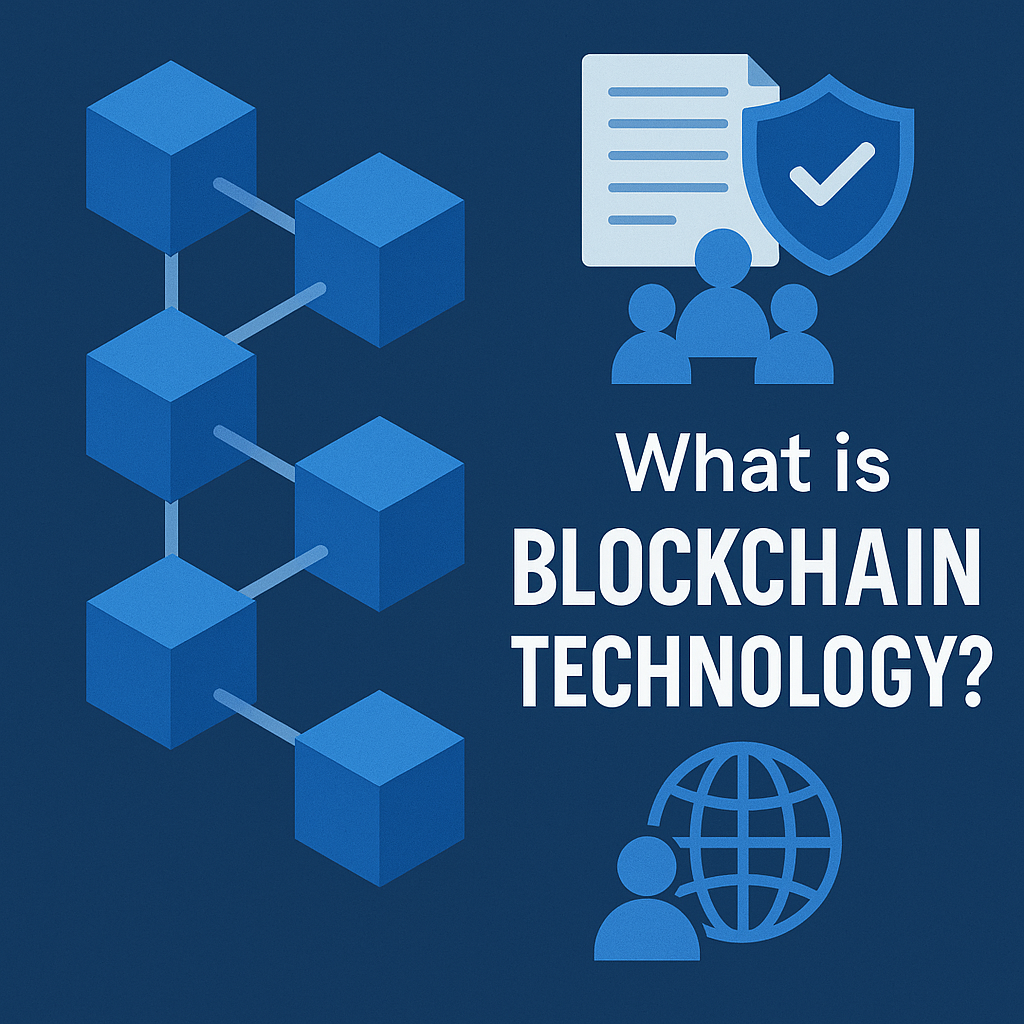
There could be different ways of storing the data and information, writing something in a sheet of paper, storing by making a file,storing the data in excel sheets using computers etc. on an excel file,as information is structured in the form of a table. In a blockchain, the data are structured in the form of blocks. Each block is made up of three main components. First , the data that you store in a block. Secondly , each block has its own fingerprint that uniquely identifies the block among other blocks which is called hash. And third, each of these blocks stores the hash of the block before it. In this way the blocks are linked with each other making a chain.and the first block which doesn’t store the hash of the previous block is called the Genesis block. The most unique thing is that, if anybody tries to change or tamper with the data in any block, then the fingerprint, or hash of the block will change. If the hash of one block changes, the hash of the next block will also change which breaks the chain and alerts the system plus Blockchain doesn’t live in a single computer because of decentralization. It’s copied across thousands (or even millions) of computers all over the world. These computers constantly compare their copies.If one person tries to tamper with their copy, it won’t match with the rest. The network sees the difference and simply rejects the tampered version.Tampering with blockchain is almost impossible because each block is linked to the previous one, creating a secure chain.
Benefits of Blockchain Technology
Blockchain actually solves real problems. Blockchain plays a unique role that the other traditional technologies that rely on centralized systems. Here are some strong reasons why people are getting so hyped about it:
- Decentralization: Decentralization means No more control of central authority which is the unique and attractive features of blockchain technology. Everyone in the network has a copy of the data, so there’s no single point of failure and control.
- Security: security is the one of the best features of blockchain technology that attracts the people to use it. Once data is added, it can’t be changed.the record will be forever and makes it really hard to hack or tamper with.
- Transparency:Transparency in blockchain technology means that every individual using the system can see the same information. Nothing can be hidden. Once a transaction or record is added to the blockchain, it’s shared with everyone in the network and becomes part of public history.
Now, while reading this, you might be thinking, “If everything is transparent in blockchain, then what about privacy?” That’s a fair question and the answer is actually pretty cool.Even though blockchain is transparent, it doesn’t mean your personal information is out there for everyone to see. Instead of showing real names or personal details, blockchain uses unique codes or wallet addresses to represent users. So yes, people can see that a transaction happened, but they don’t know who it belongs to unless you choose to tell them. It’s kind of like writing your name as a secret code people see that something happened, but only you know it was you. This way, blockchain gives us openness without losing privacy. In some cases, like in healthcare or business, there are also private or permissioned blockchains, where only selected people can access the data. So depending on the need, blockchain can be as open or as private as it should be, without losing trust or security. - Trust without third parties: You don’t need to trust anyone. You can perform the task, view it, and verify it by yourself—no need for a bank, government, or any middleman. The system itself builds trust, which can be very useful and satisfying in real-life situations, like voting in elections.
- Fast and borderless: Transactions can happen anytime, anywhere. We don’t need to wait for business hours or any central agencies approval to complete the transactions.
- Cost-effective: blockchain completely removes an extra layer of intermediators or middlemen like banks, brokers and lots of paperwork which is helping to save money. We can directly deal with others, which saves both time and money.
- Traceability: wecan track the entire history of the product, transaction, or record from start to end.
Some Real-World Use Cases of Blockchain
As of early 2025, blockchain technology is growing rapidly and is already being used in real-life applications across various industries. It’s not just a trend anymore, it’s becoming an integral part of how we handle data, transactions, and trust in this digital world. Ok, let’s discuss some real-life use case of blockchain technology which are being using as well as can be use in the future:
- Supply Chains: we can see that the large companies like Walmart are using blockchain to track their products from the farm to the shelf which helps them spot issues quickly whether it’s a contamination problem or a delay which results in taking action fast. By having all the data in a single transparent system, they can ensure food safety and deliver fresh products to their customers.
- Healthcare:Blockchain technology is also making healthcare better by keeping patient records to be securely shared between hospitals and patients. With blockchain, medical information can’t be altered without notice, reducing errors and improving the quality of care. Medical teams like Doctors and nurses have real-time access to a patient’s full medical history, helping them make more informed decisions fast.
- Digital Identity:
Forget remembering countless passwords! Blockchain is making it easier and more secure to prove who we are. Instead of relying on a password or third-party service, people can use blockchain to verify their identity in a way that’s safe from hackers and fraud. - Voting Systems:
Some countries are experimenting with blockchain-based voting systems, and the results are looking promising. Voters can see exactly that their vote was counted, without having to trust a central agency blindly. It’s increasing the transparency of elections, making them fairer and reducing the chance of fraud. This could be a game-changer for democracies worldwide which is really amazing. - Real Estate:Buying or selling property involves a lot of paperwork, but blockchain is streamlining this process as well. By recording property ownership on the blockchain, it helps eliminate fraud, reduce paperwork, and ensure that all transactions are clear, secure and easy. It’s making real estate deals faster, simpler, and safer.
- Charity and Donations: Blockchain is also helping make charity more transparent. Donors who get involved in different charity and donations programs can track exactly where their fund goes. This reduces the chance of funds being misused and gives people confidence that their contribution is going to the right place, making them motivated and feel a type of satisfaction too.
- Copyright and Creators:
Artists, musicians, and creators of all kinds are using blockchain to protect their projects and ensure they get paid fairly. With blockchain, creators can sell directly to their audience, cutting out middlemen like record labels or galleries. It ensures that their work is properly credited, and they’re paid immediately and fairly for every use or sale.
How Blockchain Technology is Transforming Finance
I think finance is one of the biggest industries being shaken up by blockchain. Why? Because it removes the need for middlemen like banks and payment processors. Using blockchain technology, People can now send/ transfer funds directly with each other also instantly, even across borders. No more waiting days, no bank fees, and no delays from third parties. Cryptocurrencies like Bitcoin and Ethereum have already proven that it’s possible but it’s not just about digital coins anymore. Blockchain also enables smart contracts which are basically digital agreements that run on their own when certain conditions are met.
Just imagine this,borrowing money, buying insurance, or even investing, all the processes are happening automatically without any piles of paperwork or waiting for someone in an office to approve it. Sounds crazy, right? But that’s exactly the kind of future blockchain is making real and it’s already starting to happen!
The Impact of Blockchain on Modern Supply Chains
Let’s be honest, most of us don’t really know where our products that we use in our daily life come from. Whether it’s the vegetables we eat, the clothes we wear, or the gadgets we use, we know there’s a long chain of people, places, and processes involved before it reaches us. And that chain? It’s often full of delays, mistakes, and even fraud. Isn’t it?
blockchain is changing all of those.By using blockchain in supply chains, companies can track every step of a product’s journey that is from the factory or farm all the way to the store shelf. Each time a product moves, the data is added to the blockchain. And once it’s added, it can’t be changed or faked.This brings a whole new level of transparency and trust. For example, if there’s a food safety issue, companies like Walmart who are using the blockchain technology system in their business run, can now trace the problem back to the exact farm in seconds not in a day. It also helps in cutting down fake products, reducing delays, and proving whether something was ethically sourced or not.
For us as consumers, it means we get safer, more trustworthy products, and we can know exactly where the products that we are using came from.That means, No more guessing or blindly trusting the label.In short, blockchain is making supply chains smarter, faster, and more honest and that’s something we can take benefits from.
Thank You!!